

A Note Before We Begin
This article opens with a vivid historical story that might seem intense at first. It’s meant as a metaphor, a way to explore the timeless challenge leaders face when confronting uncomfortable truths. My goal is not to dwell on the past or shock you, but to highlight the vital role of courageous questioning and awareness in building organizations that endure.
If you stick with me, you’ll see how this “fool” figure offers a powerful lesson for today’s business leaders, especially in an age where real insight and self-awareness are more valuable than ever.
What Sustainable Leadership Has Always Required
I know Halloween is long behind us and we are now in the festive season of good tidings.
So when I begin with a slightly gruesome story about a monarch who was up to some terrible things, believe me, it’s not meant to dampen the holiday spirit. It’s meant to celebrate it.
Henry VIII was a 16th-century king of England who executed between 20,000 and 57,000 people during his 37-year reign. Among them were two of his wives and some of his top advisers, including Thomas More, his Lord Chancellor and a renowned humanist, and John Fisher, Bishop of Rochester.
These advisers were tasked with counseling the king on governance and administration. It was a perilous role, carrying a constant risk of falling out of favor and ending up on the chopping block. Quite literally.
It was a perilous role, carrying a constant risk of falling out of favor and ending up on the chopping block. Quite literally.
If you advised the king, you would be extremely cautious about what you said and did. One misguided word or a wrong glance could land you in the Tower of London, tortured and hoping for a swift death by sword.
In the midst of this mayhem, there was one adviser who spoke to the king fearlessly.
He called out Henry’s grand dreams as hallucinations. He laughed at his visions of fortifying the kingdom and conquering France. He mocked the king’s romantic infatuations and even called him names.
And yet, he outlived the king by several years.
Not only did this adviser make it through Henry’s reign with his head attached to his body, he also outlived the next monarch, Queen Mary, later known as Bloody Mary for her own brand of terror.
Do you know who this adviser was?
It was William Somers, the court jester, more commonly known as the Fool.
In a court where speaking truth to power could mean death, the Fool held a unique position. Shielded by humor and irreverence, William Somers could call out the king’s grandiose dreams without fear. He could challenge illusions, laugh at absurdities and remind the monarch of reality.
William Somers went on to serve in the court of Queen Elizabeth I for many years, playing his part in bringing about England’s golden age of enlightenment.
There’s a profound lesson here: the fool we tend to underestimate is often the catalyst for breakthrough insights and lasting wisdom.
The Death of a Consultant
William Somers’ primary tool for truth-telling was humor.
In the corporate boardroom, humor has its place, but it is not always appropriate. Irreverence also has clear limitations and ultimately offers diminishing value in modern advisory roles.
For this reason, the modern fool in the business world needs to develop a new set of tools and a more refined skill set for truth-telling.
The modern fool in the business world needs to develop a new set of tools and a more refined skill set for truth-telling.
You see, the traditional role of advisers - sometimes also known as coaches, consultants and guides - has not worked very well in the last few decades.
As we became a knowledge-based society and information became widely available to us all, the adviser’s role gradually shifted.
The function of a modern adviser is less about being a source of subject knowledge and expertise and more about being an agent of insights. In the business world, a modern adviser is someone who also helps apply those insights to our world and to our work.
The advent of AI has only accelerated this shift. Today, every business person, from a corner office executive to a fresh graduate in her first job, has access to the entirety of human knowledge right in the palm of their hand.
The function of a modern adviser is less about being a source of subject knowledge and expertise and more about being an agent of insights.
Information and subject knowledge have been flooding us since the 1980s. In recent years, thanks to AI, that flood has turned into a tsunami, much of it diluted into irrelevant slop salad delivered straight to our devices.
We don’t need more experts, consultants or advisers who operate in the traditional way. What we need are those who help others access their own wisdom, even as they bring their expertise and subject matter knowledge to the advisory table.
The role of a modern adviser to leadership then is not necessarily to speak truth but to help leaders discover their own wisdom.
You Can Be a Fool Too
Don’t think for a minute that the skills of being a fool are only reserved for professional advisers. In the age of AI, we all need to be fools. Each and every one of us needs to be a source of wisdom, inspiration, clarity and lucidity to those we care about.
And we need to bring them this wisdom and inspiration not by giving motivational speeches or delivering eloquent monologues. Instead, we need to help them discover the wellspring of wisdom that is already inside them, waiting to be unleashed.
There are two basic skills we need to develop to be an effective fool in the modern business world: one, asking meaningful questions and two, listening openly and without judgment.
Whether we are advising a client, closing a sale, managing a team member, working with a boss, collaborating with a coworker or supporting a friend, we need to help them access their own insights and ideas.
This is a skill, and like all skills, it needs to be developed.
The good news is that with a bit of mindful attention, we can start developing this skill no matter where we are in our careers.
There are two basic skills we need to develop to be an effective fool in the modern business world: one, asking meaningful questions and two, listening openly and without judgment.
And you can start practicing these skills right this very minute. I’ve shared a resource in this article to help you begin developing your advising abilities. And to to make it actionable, I’ve also included a quick, clickable quest.
But before these two skills can become effective, there is a mind shift you need to consider.
Mind the Gap
Our most prized, most premium mental real estate today is not information. It’s not the collected facts, knowledge or expertise. It’s not even learning in the traditional sense.
It’s the gaps in between.
This gap is where we bring awareness to all that we deal with.
This gap is the place where insights happen. This opening in time is the moment when inspiration and ideas bubble up. Over time, a continuous process of self-awareness emerges, through which our inherent, innate wisdom finds its outlet and takes outward expression.
For leaders and founders who value self-sustaining endurance over a short-sighted chase of proverbial riches - the fool’s gold - this expression of wisdom can result in an enduring organization that outlives them.
That, in the truest sense, is the legacy they leave behind.
Our most prized, most premium mental real estate today is not information. It’s not the collected facts, knowledge or expertise. It’s not even learning in the traditional sense.
If you are into self-development like I am, or if you ever end up advising founders, leaders and organization builders like I do, your greatest weapon that truly moves the needle is not what you say or how you say it.
It’s your ability to craft insightful, powerful questions.
Questions designed to bring the leaders you work with face to face with their own truths.
The truths they’ve been avoiding.
The truths they’ve been hiding from.
Good questions are powerful because they allow you to see beyond your existing mindset: those deeply held beliefs that have quietly become your limitations and barriers. They cut through the noise of assumptions and habitual thinking, creating space for fresh perspectives.
Good questions are powerful because they allow you to see beyond your existing mindset: those deeply held beliefs that have quietly become your limitations and barriers.
They invite you to challenge what you thought was true. And in doing so, they unlock possibilities you hadn’t seen before.
Right questions, asked at the right time and in the right context, open a space in your mind - a space of awareness.
It’s in that space where real reflection happens, hidden assumptions surface and new insights begin to take shape.
This is the moment when leadership moves from reacting to responding, from repeating old patterns to creating new possibilities.
This is where shifts happen, shifts that can bring profound, inside-out transformation. Not just in the leaders you work with but also in those they lead.
It creates a ripple effect that flows through the entire organization, paving the way to break barriers and ignite meaningful transformation.
Awareness sparked by the right questions becomes the catalyst for lasting change, fueling cultures that adapt, innovate and thrive.
The Lasting Gift of the Fool
So, who is the fool?
The fool is the one who holds up a mirror, not to mock, but to create awareness. This awareness is the bedrock beneath every enduring organization. It is the space where leaders confront their own truths, break free from limiting beliefs and open themselves to transformation.
The fool is the one who holds up a mirror, not to mock, but to create awareness.
Through this awareness, leaders do not just react; they respond. They do not simply manage; they inspire. And from this place, a culture takes root that adapts, innovates and thrives long after its founders are gone.
In that sense, the fool’s greatest gift is not in the words spoken but in the questions asked: the questions that spark awareness, the catalyst for lasting change. That awareness, that inner light, becomes the foundation of organizations that endure.
And that, in the truest sense, is the legacy of the fool.
Give a Gift of Aware Understanding
For me, most of these conversations happen behind closed doors.
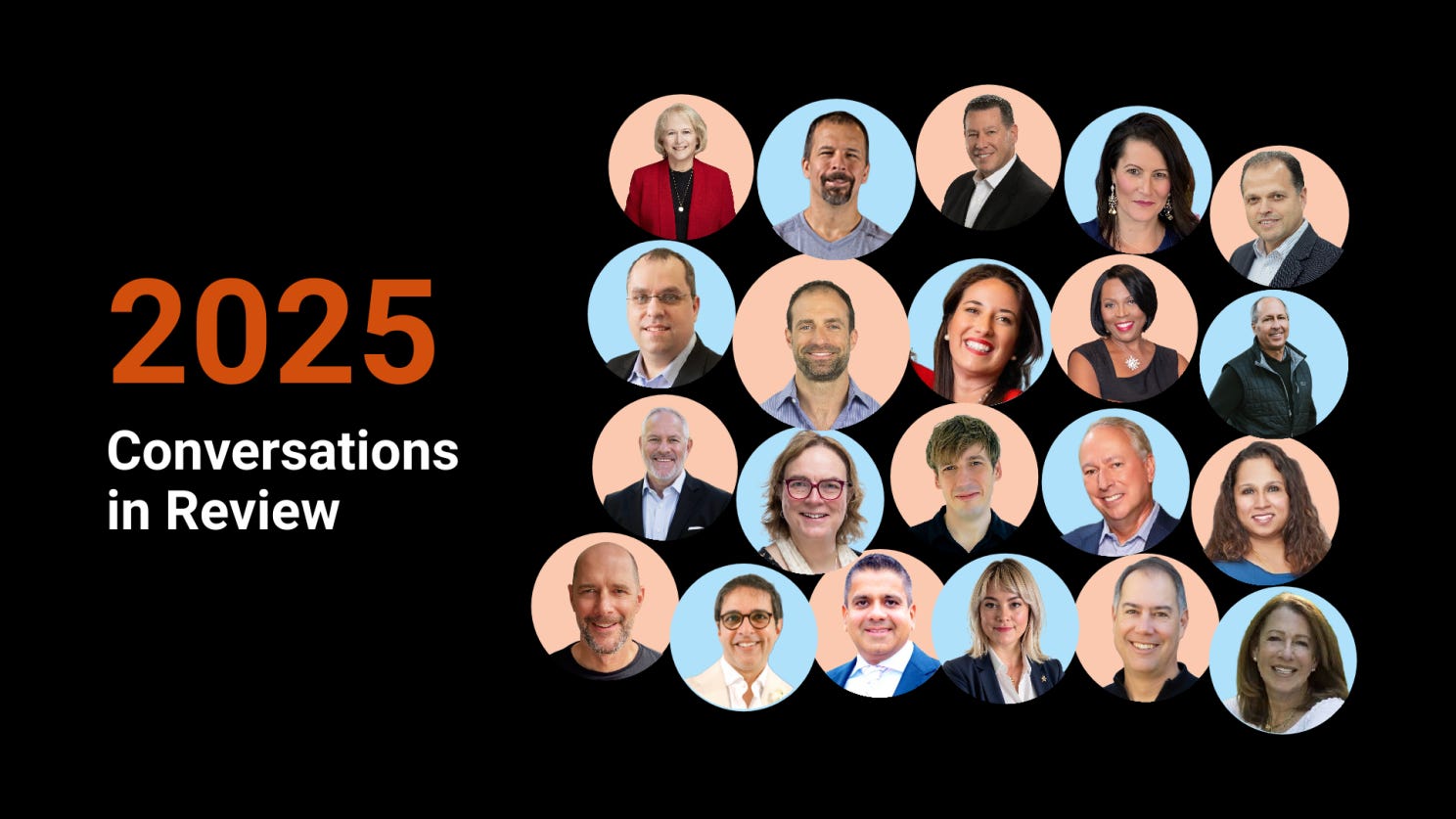
However, over the past two years, I’ve had the privilege of sharing many such deep conversations publicly on my podcast, The Business Philosopher Within You. In these two years, I have had 34 such conversations, 22 of them in 2025.
At the heart of every episode lies the same undercurrent: the awareness that opens when a question is asked. Often, the answers that emerge from that space are some of the most profound.
So this holiday season, my gift to you is a challenge. Become a better fool at my expense.
Critique my questioning and listening skills.
Here’s the challenge:
Scroll through the list of 22 conversation titles below.
Pick one that resonates with you. (Don’t overthink this!)
Click the link to watch that conversation on YouTube for about 5 minutes.
As you do, come up with a question you would like to ask the guest.
Share that question in the comments section of the YouTube video.
That’s it!
Bonus points: If you share a question I did not ask in the conversation, you’ll get a mention in the following episode where I use your question.
Don’t stop there. Once you get the hang of asking contextual, meaningful questions, take your newfound skills into your next conversation.
Give the gift of deep understanding, meaningful questioning and open listening to at least one person this holiday season.
Happy Holidays!
Bhavesh.
With Deep Gratitude to Our Guests
Before you dive into the conversations below, I want to pause and acknowledge the guests who made them possible.
Each of these leaders chose to step into conversations that were unscripted, unhurried and, at times, uncomfortable. That willingness to think out loud, with the depth that we strive for, is rare.
I’m deeply grateful to every guest who offered their time, attention and trust.
List of The Business Philosopher Within You Episodes from 2025
The Challenge:
Click on a conversation link to watch on YouTube.
Come up with a question you would like to ask the guest.
Share that question in the comments section of the YouTube video.
Bonus: If you share a question I did not ask in the conversation, you get a mention in the episode where I use your question.
For a deep dive and the full catalog of episodes, check the Comments section.
1. Culture as the Operating Rhythm
How healthy organizations are built from the inside out.
Episodes featuring:
Geoffrey Toffetti >> (YouTube Link ➡) Scaling Culture with SaaS
Mike Chaput (Part 1) >> Can You Scale Revenue Without Sacrificing Values?
Mike Chaput (Part 2) >> Activating Your Company Culture
Carol Cone >> Purpose-Driven Culture
Carrie Klewin Lawrence, MFA >> Culture Through Story
Melanie Cook >> Neurodiversity & Culture
Matt Remuzzi >> Culture That Scales
Ben Greiner >> Culture as the Foundation of a Successful Exit
2. AI, Tech and the Future of Human-Centered Organizations
Where technology, AI and humanity meet.
Mike Ettling >> (YouTube Link ➡) Ubuntu Leadership in a Tech World
Jonathan Schneider >> AI, Code Modernization, Leadership & Culture
Johan Colvig >> AI-Driven Financial Philosophy
Sri Ramaswamy >> Transforming Insurance with AI
3. Leadership, Self-Management & Awareness as Practice
The inner disciplines that shape outer results.
Bruce Kasanoff >> (YouTube Link ➡) Leadership from the Heart
Fabiana Lacerca-Allen, JD, LLM >> Situational Awareness & Crisis Leadership
Steven Puri >> Flow State & Effortless Productivity
Jeff Patterson >> Meditation & Leadership Presence
4. Learning Organizations & Human Systems
Because an organization is a learning organism, or it stagnates.
Joanne Lockwood >> (YouTube Link ➡) Inclusion vs Belonging
Dr. Christie Vanorsdale, Ed.D, Ms.Ed. >> Collaborative Learning
Chris Vaughan, PhD >> Why Associations Outperform Corporations
5. Financial Clarity & the Philosophy of Sustainable Growth
Where numbers, behavior and business philosophy intersect.
Ellen Wood >> (YouTube Link ➡) The Virtual CFO Model
Brett Bernstein >> Financial Advisory in the Age of AI
Anupam Nandwana >> Scaling a 300-Employee SaaS Busines